Showing posts with label leadership development. Show all posts

Monday, October 17, 2016

Ensuring your Culture is a Driver rather than a Derivative

“Culture is our source of momentum,” a CEO told me.  “With markets changing so rapidly, culture is the driving force, keeping us from becoming stagnant.”

            A vibrant culture can power an organization through the most trying times. As the diagram shows, culture is the flywheel, a continuous dynamic keeping all the gears going in the right direction.

            However, if culture is left unstated or remains implicit, employees look elsewhere for clues on what to prioritize and how to behave when facing difficult challenges.
In a WSJ OpEd piece, former IBM CEO Lou Gerstner questions whether company culture is too often reduced to a derivative of other processes.  In his example, a CEO’s state-of-the-union proclaims their commitment to investments in future growth and R&D.  Six weeks into the quarter, the CFO sends a memo about Q1 results falling behind budget and discretionary spending is put on hold.  “Now which of those communications,” asks Gerstner, “do you believe shapes the employees view of what really matters and therefore what they see as the true cultural priorities of the company?”
Consider what happened at Wells Fargo.  A company founded on trust was hauled in front of Congress because an overemphasis on financial performance and compensation plans cranked the gears of the organization in the wrong direction.  The culture got so poisoned, even those calling out the unethical practices were shouted down.  Their CEO got axed.
I know I’ve succumbed to the tyranny of short-term results, allowing cultural initiatives to be trumped.  What about you?  How do we prevent team members from looking to comp plans or the budget process for behavioral cues rather than core values and cultural norms? 
In a study featured in the Harvard Business Review, researchers stated,  “What we learned about companies that have strong leadership pipelines and strong financial performance: first, they focus on culture.  They talk about it, they live by it.  People in the company know what [culture] stands for and this gives them freedom to lead in different but complimentary ways.” 
I love that notion – the best companies talk about culture.  At my firms, we talked of culture, but not about culture.  We said our culture was great, but we never said what our culture was.

Company culture is most potent when everyone understands the foundations and principles.  With no ambiguity about the Expectations for employees, they are more likely to deliver.  If Interactions and Operating Norms are clearly stated, then staffers aren’t looking to the wrong sources for how to act. 
Codifying your company culture is a great place to start.  In companies I work with, we’re bringing together leaders and team members in discussion groups to define the Expectations, Interactions and Operating Norms.

Priority Management is one area in need of clarity.  Employees often lament about too much work and too little time.  And with market forces shifting company strategies or tactics, priorities must be readjusted down the chain.  Without explicit company approaches to prioritization, staffers have to guess at tradeoffs between tasks generating revenue or fulfilling client requests.  They use their own methods to choose between important long-term projects and urgent requests.  Determining when to say “No” or which items are delegated and which are put on the back burner is a confusing quandary.
This Important vs. Urgent chart is one model for helping staffers decide between seemingly conflicting priorities.  Adopting these fundamentals for allocating individuals’ time can minimize misalignment and inefficiency.
Discussions about Priority Management or other elements of company Expectations, Interactions and Operating Norms can spark conversation and debate.  There are no easy answers.  However, the dialog is engaging, and important!


Culture can be a steadying force as your business scales.  To leverage this asset, put aside the time with your team to codify the foundations of your culture then document the results.  This clarity can make culture a momentum builder for your organization.

Friday, March 4, 2016

Next Generation Organizations: Peer Accountability - Part Deux

           
High growth leaders are always seeking ways to spark innovation from their staff.  Experimenting with progressive organizational paradigms is an emerging strategy. 

Thriving collaboration and employee engagement result from well-conceived approaches to  “How we Operate”.   Core Values are clearly defined and measured.  Explicitly communicated cultural norms and expectations enable teams to work together more fluidly and generate the market breakthroughs needed to sustain growth. 

Autonomous, Cross-functional Teams, Distributed Authority, Transparency and Peer Accountability are part of the next generation of organizational design.  

In the last post, we explored the power of Peer Accountability to create ownership within the ranks.  Relationships with colleagues are important in today’s workplace.  Tapping these bonds can create greater accountability than traditional superior/subordinate systems.  Peers hold one another responsible for deadlines and deliverables as well as inspire teammates to perform at their best and break new ground.  Side by side every day, co-workers have the richest insight on how teams are operating and steps to improve.

While a powerful source of productivity, Peer Accountability is not without downsides.  There have been several well-publicized accounts of this new approach gone wrong.  So how do we create the ideal situation for success?

Peer Accountability is most effective when companies promote organizational trustworthiness, authenticity and healthy conflict.
           
Trust is fundamental to collaboration.  Young firms understand this dynamic and many operate more like a family than an institution.  In a trustworthy environment, employees see the best in each other rather than the worst.  They celebrate one another’s strengths instead of carping on their flaws.  They grant the benefit of the doubt, an aura of grace and mercy where forgiveness reigns over bitterness and resentment.  When individuals look to help their team members grow, serving each other is as important as serving the customer.

Strong connections among colleagues as well as management engender a setting for effective Peer Accountability.  Authenticity and candor are cornerstones.  People are real with one another; open, direct and honest.  There are no masks or curated reputations.  They respect each other enough to speak the truth.  And they are unafraid of being transparent about who they are and what they stand for.  Staffers feel safe enough to be vulnerable, admitting fears or concerns, disclosing mistakes or willingly facing the inevitable failures that come with innovation.


Peer Accountability is natural when trust and authenticity are norms.  Individuals are open to input, valuing the constructive feedback of their co-workers to further their professional development and improve team dynamics.   
For many, Peer Accountability seems like a formula for conflict.  Truth is, conflict is unavoidable in a robust, growing organization.  Bright, passionate people will have differing opinions.  Sadly, too many companies wrestle with unruly, rancorous conflict or worse, conflict avoidance.


We have all experienced interactions on the conflict continuum, some constructive and others damaging.  Neither extreme is ideal, either.  Healthy conflict is a balance point where parties share relevant information, feel heard and respected while having optimism in each other.  Debate is open and unfiltered.  There is a willingness to disagree yet a commitment to support the resolution regardless of the outcome.  

With healthy conflict, teammates are not worried about questioning the ideas of others regardless of where they sit on the Org chart.  The best idea does not have to be one’s own and deliberations among one another are simply part of reaching the optimal solution.

With a foundation of trustworthiness, authenticity and healthy conflict, the power of Peer Accountability can be fully leveraged to help businesses thrive and scale.


In our next post, we will more examine how Transparency augments Autonomous Teams, Distributed Authority and Peer Accountability as well as laying the groundwork for leaders to serve as Catalysts and Coaches. 

Thursday, February 4, 2016

The Advent of Peer Accountability

Commenting on workplace changes for a recent WSJ article, the Head of an Investment Bank said, “Continuity matters, developing people who understand the firm, understand the culture.
We're not turning the whole place upside down, it is enhancements and realistic to what this generation wants
.”

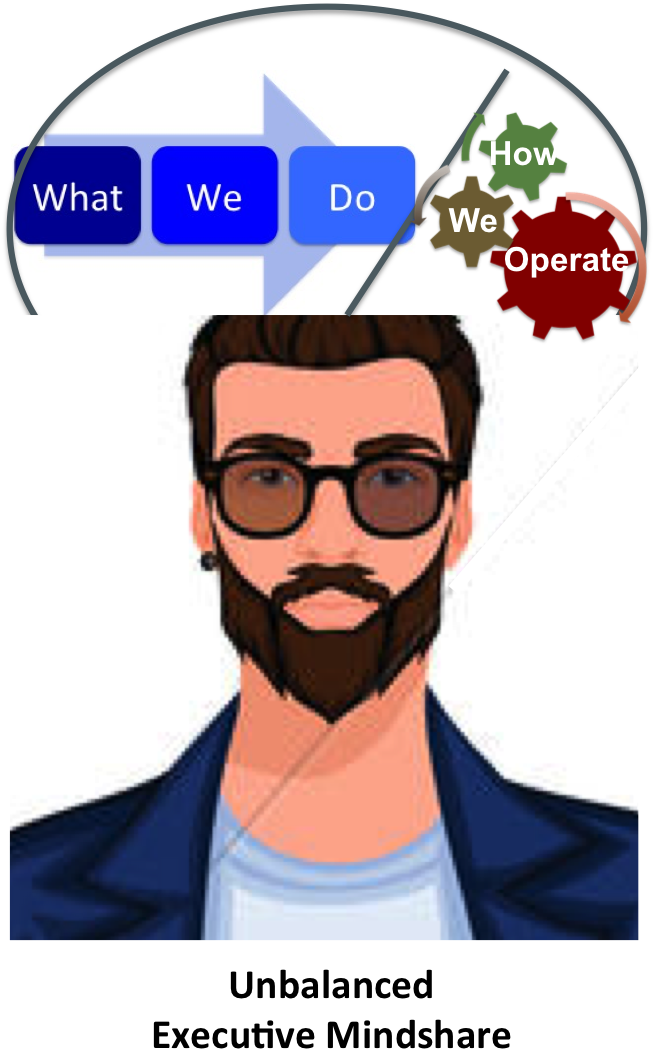
Even in the notorious “grind them to death” Investment Banking world, leaders realize today’s marketplace demands a change.  The pre-occupation with performance and output creates an organizational imbalance.  “What we Do” is first and foremost in C-suites dominated by strategy, products, biz dev and technology executives.  Values, culture and professional development get the short straw.

The best and the brightest are increasingly attracted to firms committed to a world class workplace as well as best-of-breed products.  An ideal employer is purposeful about “How we Operate”.  Professional development should not be a byproduct or happenstance but rather part of an intentional plan to inspire the next generation of leaders.  Today's talent wants to thrive at work not just survive till the next bonus check or liquidity event.

Progressive young firms are experimenting with new organizational paradigms and structures as a means of improving “How we Operate”.  One such approach is a Collaborarchy™ built on five foundational cornerstones.

Ensuring leaders and staffers meet commitments and deliver on promises is basic to success.  Companies are trying to instill a high level of ownership among team members at all levels.  Peer Accountability has become a viable alternative to traditional top-down approaches.

In most organizations, the superior/subordinate system is the primary means of accountability.  Bosses set the directives then oversee their execution.  Reviews and compensation models are predicated on performance assessments from the supervisor.  While it's not nobles vs. serfs, managers’ means of enforcing accountability can range from effective to abusive, from collaborative to coercive, from empowering to power plays.  

The breakdown of vertical accountability can come from the subordinate side as well.  Staffers become adept at telling the bosses what they want to hear or deflecting blame onto others.  Accountability becomes a political game where some workers play better than others.

Traditional accountability structures foster a murky reality.  Communications up and down the ladder are filled with misconceptions and half-truths.  Determining who answers for missed deadlines or botched deliverables is muddled by CYA attitudes and self-preservation tactics.  As a result, trust is lost and performance suffers.

Peer accountability is an indigenous approach delivering increased productivity, robust customer care and higher engagement in a simple, more natural way.  The concept is straightforward; colleagues hold one another accountable for fulfilling their promises. 

On Championship teams, the players in the huddle challenge each other to play at their best. The coach is not on the field.  The workplace is no different.  Winning organizations don’t rely on bosses to define responsibility and meet expectations.  Teammates own the results and manage commitments amongst themselves.

Peer relationships are important to young workforces.  They can inspire one another to break boundaries and disrupt markets. Tapping these bonds is an enlightened means of sparking all staffers to achieve their potential while living out company’s values and cultural norms.  Working shoulder-to-shoulder, day after day, peers have the best vantage point on who is carrying their fair share of the load.

Peer Accountability can be implemented in a number of ways.  Self-directed teams are a great place to start.  As discussed in a previous Blog, autonomous teams generate their own agenda and task one another to meet deadlines and deliverables.  The proper balance of collaboration and independent thinking enables innovation to flourish.

Peer Reviews provide colleagues a chance to weigh in on each other’s performance.  Feedback from multiple co-workers on teamwork, leadership and values generates more robust insights for individuals. Coupled with self-assessment and manager input, the peer-to-peer review process leads to greater growth for all team members.

Holding their peers accountable for physical and emotional well-being demonstrates teammates' compassion for one another.  Proper rest, nutrition and fitness are often sacrificed in high growth business environments.  This imbalance leads to anxiety and exhaustion. 
Fatigued co-workers inhibit the capability of the team.  Colleagues can encourage appropriate work-life balance as well as create safe forums to address the stress and toll of their work.  Kindness and empathy are as much a part of great teams as passion and performance.

So why isn’t Peer Accountability the norm?  On the one hand, assessing one’s teammates is awkward.  Some feel they have no right to judge others.  Giving negative feedback can be uncomfortable and jeopardize relationships.  On the other hand, the power of peer accountability can be exploited.  A widely heralded exposé on the culture of Amazon highlighted the harsh treatment by peers in the review process.  Animosity and heightened internal competition resulted, the antithesis of what was intended.  There are other examples of companies suffering from peer feedback programs gone wrong.


Peer accountability is powerful.  However, implementing such changes requires the proper culture and work environment to yield the benefits.  In our next blog, we will explore the foundations needed to foster effective Peer accountability. 

Monday, January 11, 2016

Advancing beyond the "Megamind" Organization


In most businesses, leadership’s primary focus is on “What we Do”.   An ingenious idea is hatched and a cavalcade of strategy, product design, engineering, branding, sales and servicing steps follow.  Squadrons of talented staff execute tactics to bring the vision to life.  “What we Do” consumes significant mindshare and resources as well as driving investment in the firm.

So what’s the problem?

Years ago, a unique idea could launch a lasting franchise – Polaroid cameras, the Xerox machine, the VW Bug, Intel processors, Windows.  Visionary founders and their colleagues could keep such businesses humming for generations.  

Today, markets evolve too rapidly and global competition is too intense to sustain businesses on a single breakthrough.  Smartphone technology, social networks and the sharing economy are examples of overnight disruptions in consumer behaviors.  CEOs and Founders tell me the accelerating rate of change and increasing complexity of markets makes their business planning mostly guesswork.  With only a murky view of the future, companies must be even quicker and more nimble or be left in the dust.

Megamind
(Courtesy of Dreamworks)
Many firms rely on a “Megamind” approach when their business model is threatened.  A brilliant leader or two go off to devise ways of outthinking the marketplace.  An alternate “What we Do” strategy, tact or “pivot” is then shared with the team to be executed.  For Megamind organizations, individual heroics can keep them afloat for a time, but not indefinitely. Besides, the burden on the leaders to be the principal source of innovation can be exhausting. 

Staying ahead of the curve nowadays requires an acknowledgment that nobody is smarter than everybody.  To create a culture of innovation, the most progressive organizations leverage the collective wisdom of the entire staff by focusing as much on “How we Operate” as “What we Do”. 

“How we Operate” represents the inner workings driving fluid collaboration among team members.  Authenticity and accountability are essential to strong internal relationships.  In a trustworthy environment, colleagues are unafraid to provide input and openly challenge one another’s thinking to hone ideas.  With engagement high, they take risks and speed decision-making to launch a stream of new initiatives.

More often than not, "How we Operate" defines the company culture.    

Firms expert in “How we Operate” are intentional.  They dedicate as much creativity and foresight to the mechanics of teamwork as to software architecture.  Their people don't settle for traditional structures, instead iterating on organizational designs as they might on product designs.  Leadership development is a priority, never left to chance or happenstance.

To ensure “How we Operate” is more than a mindset, savvy leaders are learning to measure how well their teams live out company Core Values.  They are devising ways to evaluate the quality of conversation and the depth of interactions.  Employees are creating more transparency by conducting daily communication in public forums.  Meeting protocol is continually upgraded, demonstrating cutting-edge personal dynamics and respect for each individual's contribution.

Conflict is not avoided.  Teams recognize the value of diverse perspectives to uncover the best solutions.  Debating differing viewpoints is welcomed at all levels and managed in a healthy and constructive manner.


While “What we Do” continues to occupy the lion’s share of C-Level time and attention, many recognize the need for better balance.  “How we Operate” will become increasingly important in scaling their business and sustaining future market position.  The craft of “How we Operate” will be an essential element in the company identity, establishing a point of distinction for attracting the best and the brightest.